
Step-By-Step: How To Format Your CV In Reverse Chronological CV
Your CV is your personal timeline, a story of growth, skill, and achievement. But how you tell that story matters just as much as the story itself. If your professional journey is not easy to follow, recruiters might miss your most important milestones.
That is where the reverse chronological format comes in. It flips your career history on its head. Start with your most recent experience and work backwards so employers can immediately see what you are doing now and what you have accomplished lately.
It is clean, professional, and recruiter-approved. Whether you are an experienced professional or just starting to climb the ladder, this format makes your resume easy to scan, impactful, and built to impress at first glance.
Why Reverse Chronological Order Works Best
Recruiters love efficiency, and the reverse chronological format gives them exactly that. It presents our most recent roles right at the top, so they instantly know what you are currently doing and how your skills align with the position you are applying for.
It is also a powerful way to showcase progress. Each role builds on the last, creating a clear story of professional growth and steady development. This natural flow makes your achievements easy to follow and your career path crystal clear.
Plus, it helps you stand out in applicant tracking systems (ATS). Since this structure highlights job titles, companies, and dates, it is easier for software and hiring managers to scan through, giving your resume a much better chance of landing in the yes pile.
A professional resume writer can help you boost the chances of securing the interview calls.
Benefits Of A Reverse-Chronological CV
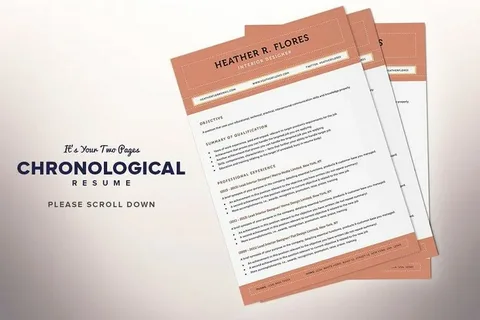
The reverse-chronological format is not just popular, but also practical. It helps your resume stand out by presenting your most recent and relevant experience first, making it easier for employers to see your current strengths and progression. Here is why it works so well.
Highlight your experience first
Employers don’t have time to dig through your history. They want to see what you are doing now. With this format, your latest job and achievements take center stage, instantly showing recruiters how your recent experience aligns with their needs.
Showcases your strongest skills
By placing your most recent roles upfront, you naturally emphasize your newest and most refined skills. This helps employers quickly assess your expertise and compare your qualifications to those of other candidates without scanning the entire document.
Keeps your career story consistent
The reverse-chronological order gives your resume a smooth, logical flow. It outlines your career journey step by step, making it easier for employers to follow your growth, see your stability, and understand how each role has prepared you for the next big opportunity.
How to write a reverse-chronological CV
Writing a reverse-chronological resume is all about presenting your professional story in the clearest, most strategic way possible. It is to show how each step has led to your current expertise. It works great when paired with a well-written cover letter. Here is how to structure it perfectly.
Start with your contact information
Begin with the basics at the top. Your full name, phone number, email address, LinkedIn profile, and city or location. Keep it simple, professional, and easy to spot. Recruiters often decide whether to keep reading within seconds.
Write a strong personal profile
This short section acts as your elevator pitch. In 3 – 4 lines, summarize who you are, what you do, and what makes you stand out. Highlight your core skills, experience level, and career goals, and personalize them to match the role you are applying for.
List your work experience
Here is where the reverse-chronological format thrives. Start with your current or most recent job, then move backwards. For each role, include your job title, company name, employment dates, and key achievements. Use bullet points to show measurable results. Recruiters love numbers and impact.
Add your education
Include your highest qualifications first. List your degree, institution name, and graduation date. If you are early in your career or applying for academic roles, this section can come before your work experience.
Highlight skills and achievements
Wrap up with a skills section that reflects your technical and soft strengths. Think communication, project management, digital tools, or industry-specific expertise. You can also add certifications, awards, or notable projects that enhance your credibility.
Keep it clean and consistent
Use clear headings, uniform spacing, and professional fonts. Consistency in design makes your resume easier to read and gives it a polished, confident look, exactly what employers want to see.
Sample Reverse-Chronological CV
[First name] [Last name], [Degree or certification if applicable]
[Phone number] | [Email address] | [State]
Professional Summary
[Highlight who you are, years of experience, your industry and field, core strengths, career highlights and achievements, career goal in 2-3 lines]
Experience
[Job title] | [employment dates]
[Company name] | [city], [state]
[Add what you did in detail, reason, and results with job duty, write in star method on your resume]
[Job duty]
[Job duty]
[Job duty]
[Job title] | [employment dates]
[Company name] | [city], [state]
[Add what you did in detail, reason, and results with the job duty]
[Job duty]
[Job duty]
Skills
[Category]: [skill] [skill] [skill] [skill]
[Category]: [skill] [skill] [skill] [skill]
Education
[Degree] | [name of school or university]
Certifications (optional)
[Certification name], [organization] – [year of completion]
Frequently Asked Questions
What is the reverse chronological format for a CV?
The reverse chronological format lists your most recent experience first, followed by older roles in descending order. It starts with your current or latest job and moves backwards through your career history, giving employers an immediate view of your most relevant and up-to-date skills.
Should a resume be in reverse chronological order?
Yes, most recruiters prefer resumes and CVs in reverse chronological order because they are easy to read and clearly show career progression. It highlights your most recent achievements, helping employers quickly assess your current qualifications and suitability for the role.
What is a reverse CV?
A reverse resume is another term for a reverse chronological resume, where the most recent experiences appear at the top. It focuses on your latest roles, projects, and accomplishments, making it ideal for professionals with consistent work experience and a clear career path.
How to put a CV in chronological order?
To structure your resume in chronological order, start with your most recent job and work backwards. For each role, include your job title, company name, employment dates, and key achievements. Follow this with your education, skills, and certifications, all arranged from newest to oldest.
Conclusion
A reverse-chronological resume is a smart storytelling tool. By placing your most recent and relevant experiences first, you make it easier for recruiters to see your current value and career growth at a glance.
It is clean, professional, and universally preferred, especially for candidates with steady work experience or clear career progression. When structured well, this format highlights what you have done and where you are headed.
So, take your time to organize your resume thoughtfully. Each section, from your summary to your achievements, should build a clear picture of your professional journey that convinces employers.